 claude.com
Building always-on agents
Always-on agents run indefinitely, deciding how and when to act across many sessions. This guide walks through their core primitives and how they fit together.
Bookmarks I keep coming back to
34 links
Stay ahead of the curve in Web Development with Javascript Every Month Newsletter.
I will deliver a curated selection of articles, tutorials, and resources straight to your inbox once a month.
claude.comAlways-on agents run indefinitely, deciding how and when to act across many sessions. This guide walks through their core primitives and how they fit together.

 webdev.teknium.io
462 live demos of stylistically unusual web libraries: dither shaders, DOM-free text layout, retro OS stylesheets, hand-drawn charts, WebGL, motion and live-coding.

 interfacelineage.com
A free library of interface patterns and principles. Name the mechanism, prompt it to your AI, and invent new interfaces.
 github.com
The workflows and skills the MiniMax Code team uses to build MiniMax Code. Open source, install and use. - MiniMax-AI/mcode-stack
 sarthakmishra.com
A practical TanStack Start performance guide: how cutting downloads and fixing fonts and images took my home page from 73 to 100 on mobile Lighthouse.

 denodell.com
If a design system’s components are slow to interact with, so are any apps built with them. I timed large dropdowns and checkbox lists in some popular design systems, worked out how to make the slow ones faster, and wrote tests that fail when they’re too slow.
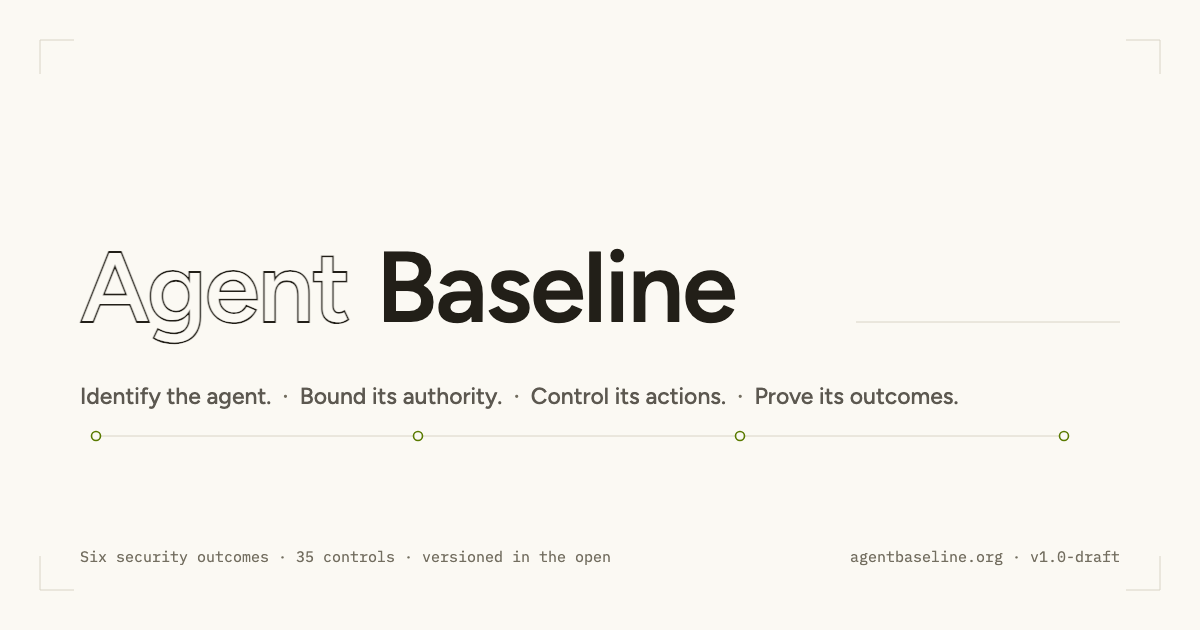
 agentbaseline.org
Six outcomes, because together they answer the three questions you are already being asked.
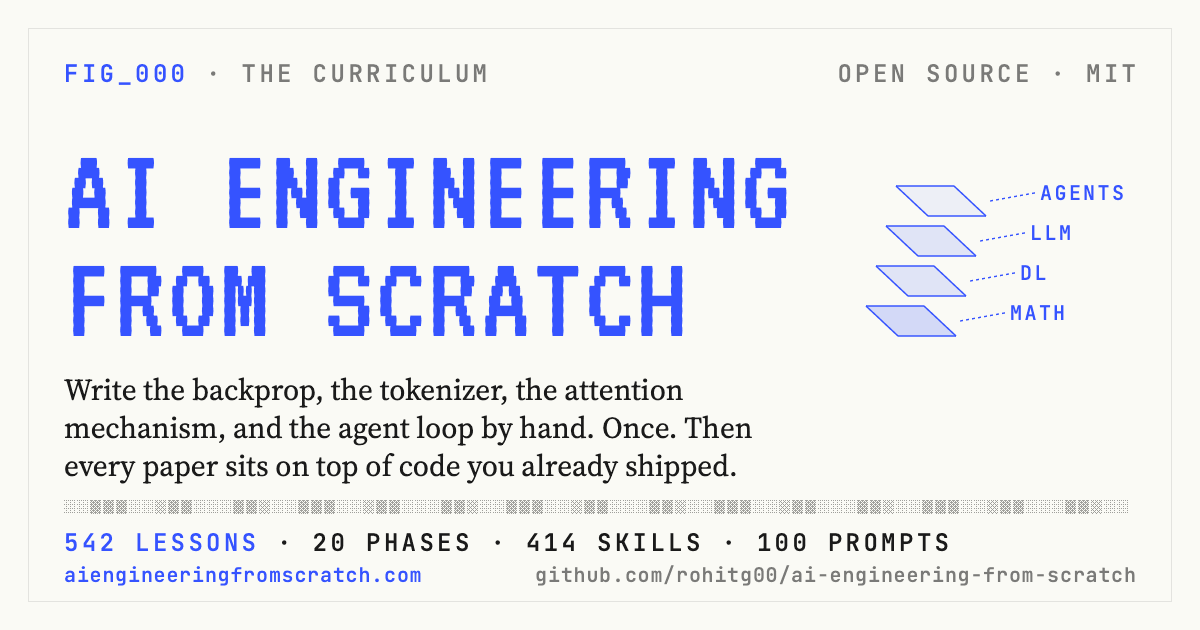
 aiengineeringfromscratch.com
542 lessons. 20 phases. Write the backprop, the tokenizer, the attention mechanism, and the agent loop by hand before any framework gets imported. Python, TypeScript, Rust, Julia.
CRDTs don't have to be all academic papers and math jargon. Learn what CRDTs are and how they work through interactive visualizations and code samples.
 kurtextrem.de
All-in-one guide for improving Interaction-to-Next-Paint (INP) React applications. Introduces the useAfterPaintEffect hook.

 tkdodo.eu
Yes, it's type-safe, but there's so much more to love about TanStack Router.
ESLint and TypeScript-ESLint are indispensable. Their type-aware rules—no-floating-promises, the entire no-unsafe-* family, and dozens more—have become the back


 types.kitlangton.com
Interactive visualizations of TypeScript concepts. Behold pretty colors.


Hidden and not-so-hidden tools that will make your life easier.
 userinterface.wiki
Interactive examples exploring animation principles, motion design, and UI patterns.
github.comBeginner, advanced, expert level Rust training material - microsoft/RustTraining

 drew.silcock.dev
A high-level overview of how PostgreSQL stores data on disk, covering segments, pages and more.

 aha.io
We ripped out the mature React framework powering this website and built our own mini framework with a few handcrafted files. By most accounts, that's the last thing you should do. But it reduced the amount of JavaScript and JSON data loaded by 90%

 nonsoo.com
Almost a decade ago, React’s rendering algorithm was rebuilt, and with that it brought about new tools, ideas, and ways of building UI. But those tools arrived incrementally and were adopted in isolation, often framed as “optimizations” rather than part of a unified model. So are they truly independent ideas, or are they different expressions of the same underlying model made possible by the new rendering algorithm? In this article, we’ll explore this idea and learn what it means to embrace asynchronous work as a core concern of React.


